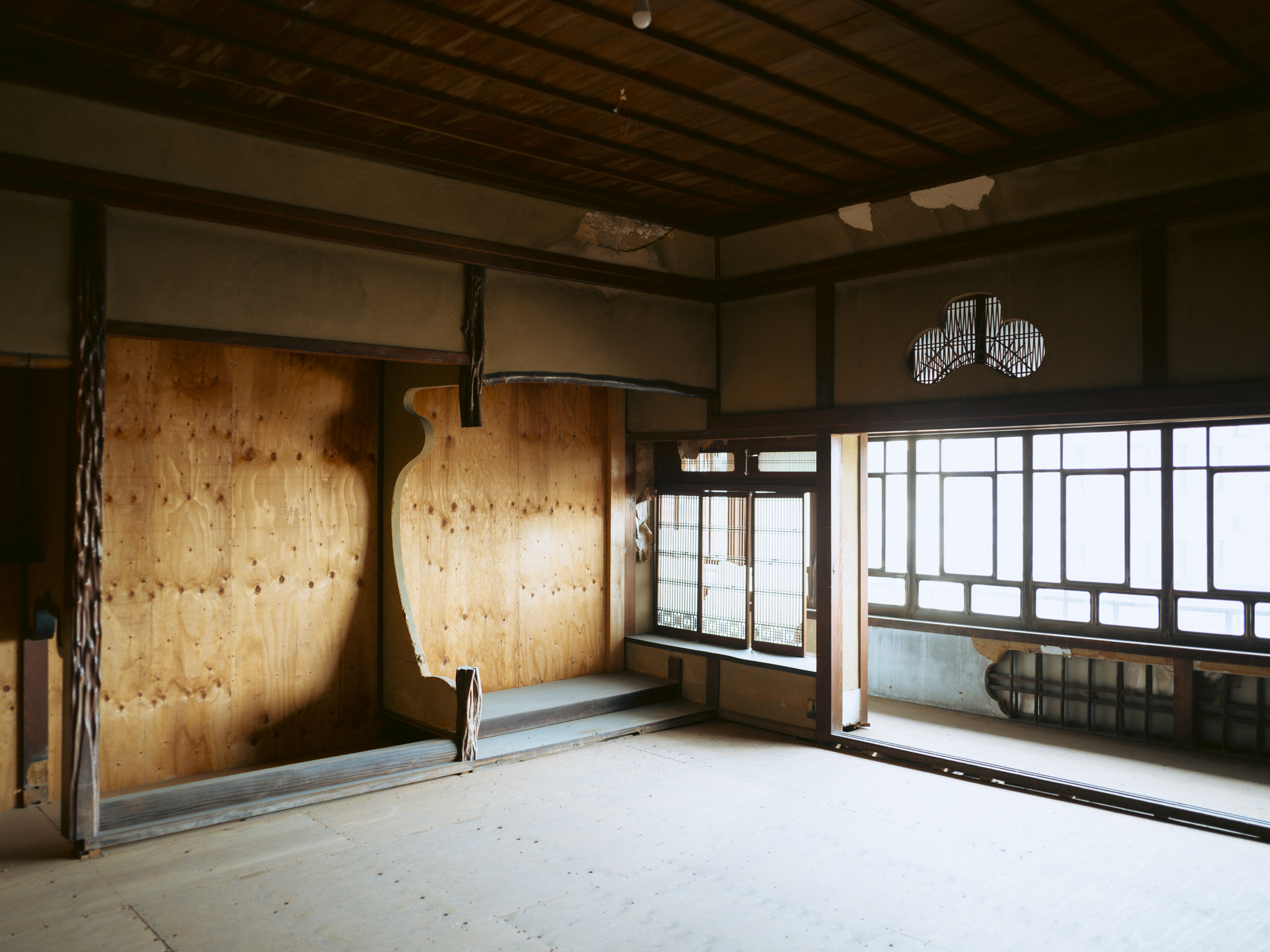
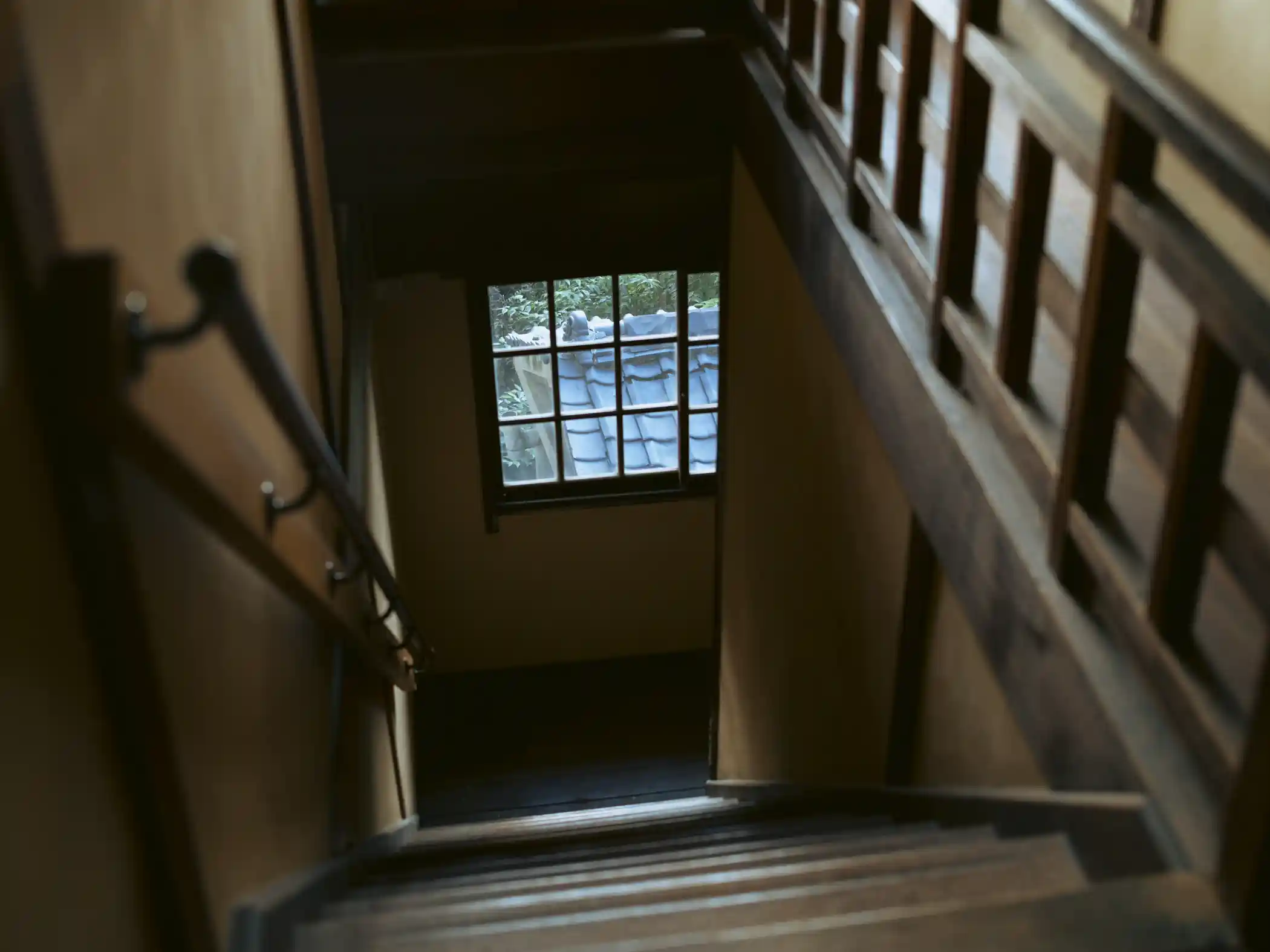
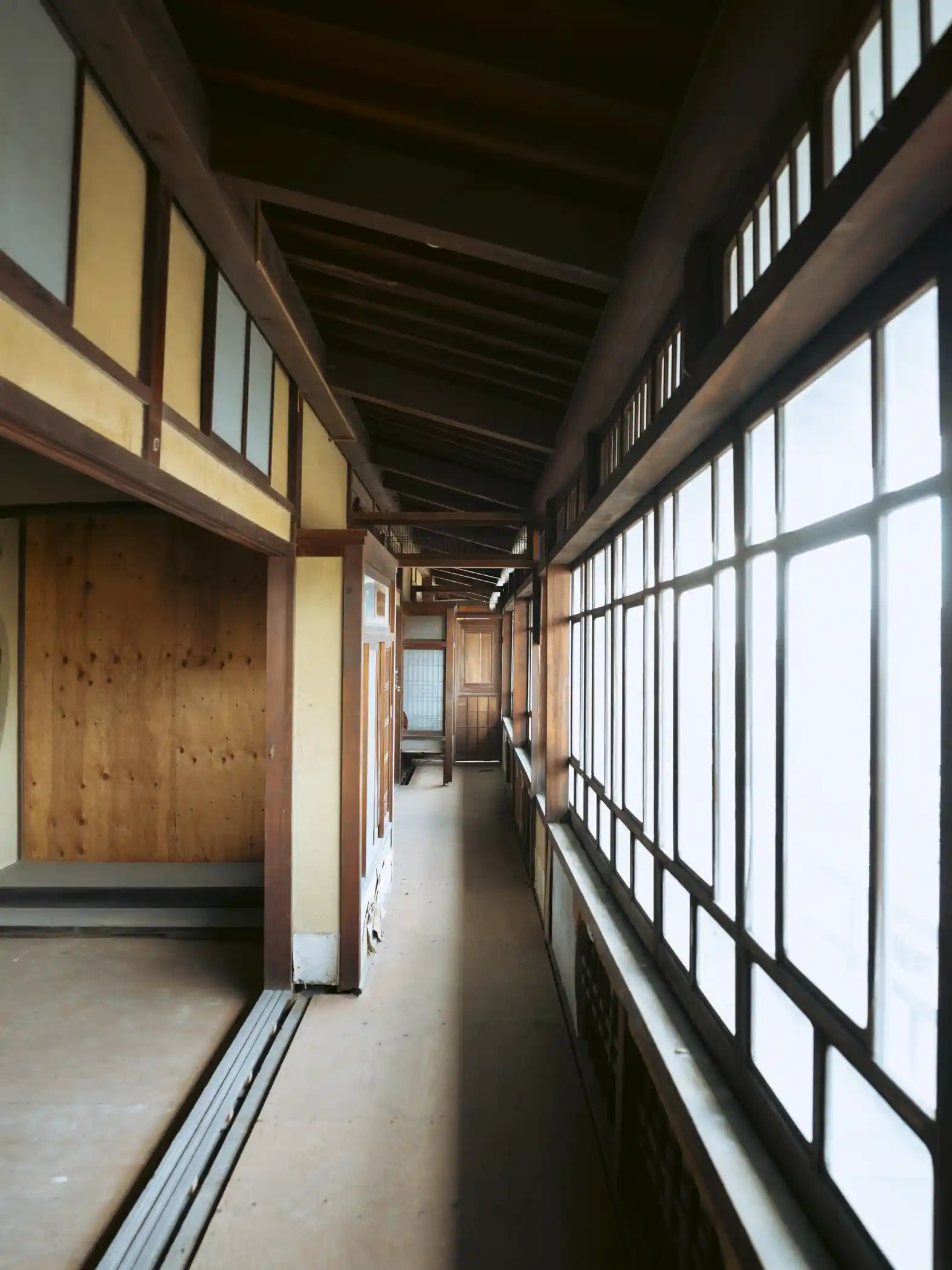
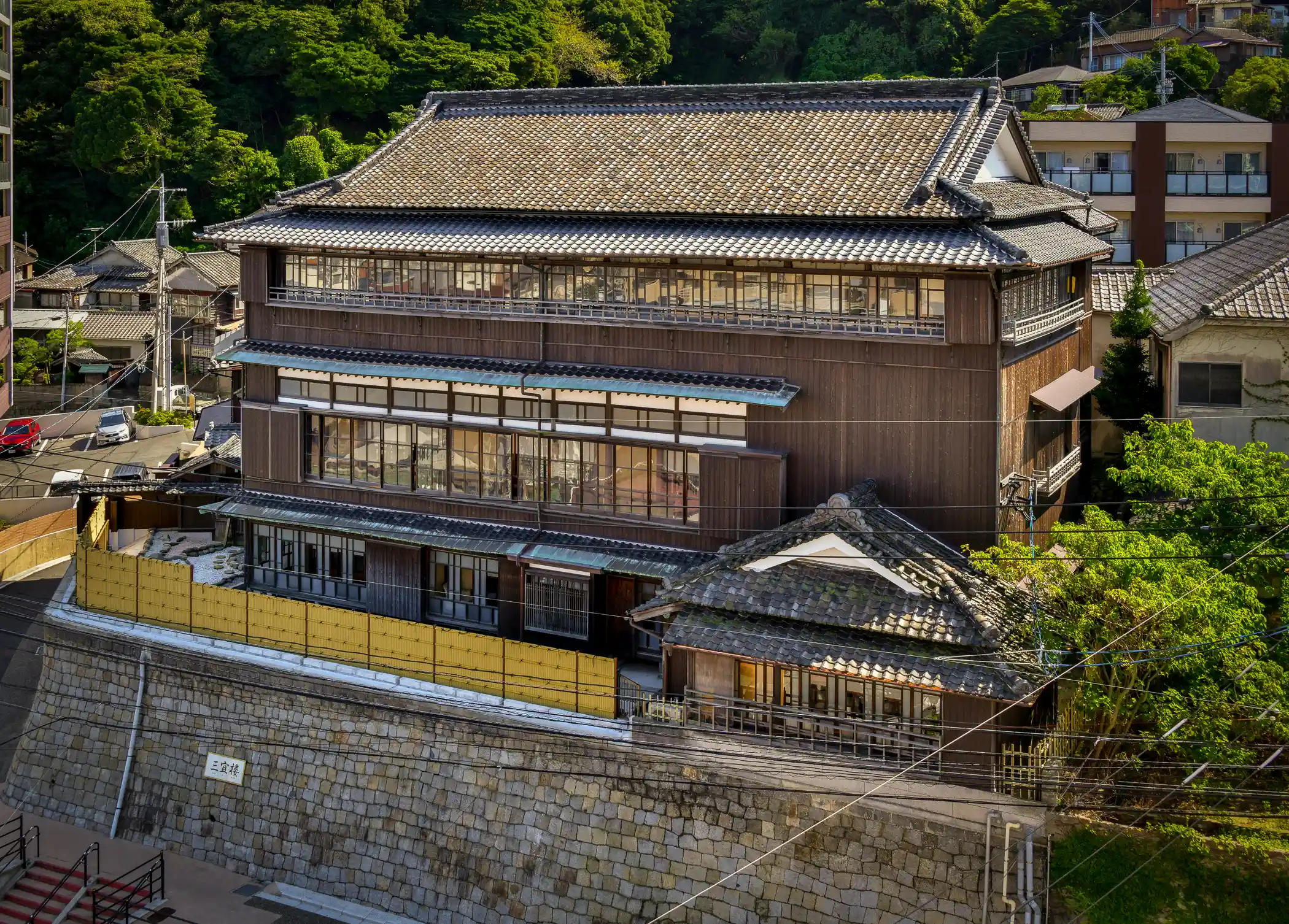
Sankirō is a ryōtei (traditional Japanese restaurant) building in Kiyotaki, Moji Ward, Kitakyushu City, Fukuoka Prefecture, completed in 1931. It was a high-end ryōtei founded in Moji by Miyake Asa, and in its heyday it is said to have been counted among the top three ryōtei in Mojikō. Its three-story wooden building is one of the largest surviving ryōtei buildings in Kyushu. The designer is unknown.
After the ryōtei closed around 1955, local preservation efforts saved the building from demolition. Kitakyushu City carried out preservation and repair work, and it has been open to the public since 2014. The port town’s social venue, where banquets were once held night after night, still watches over Mojikō from the top of the hill.
A hilltop pavilion, a pillarless 100-mat hall and playful lattice windows
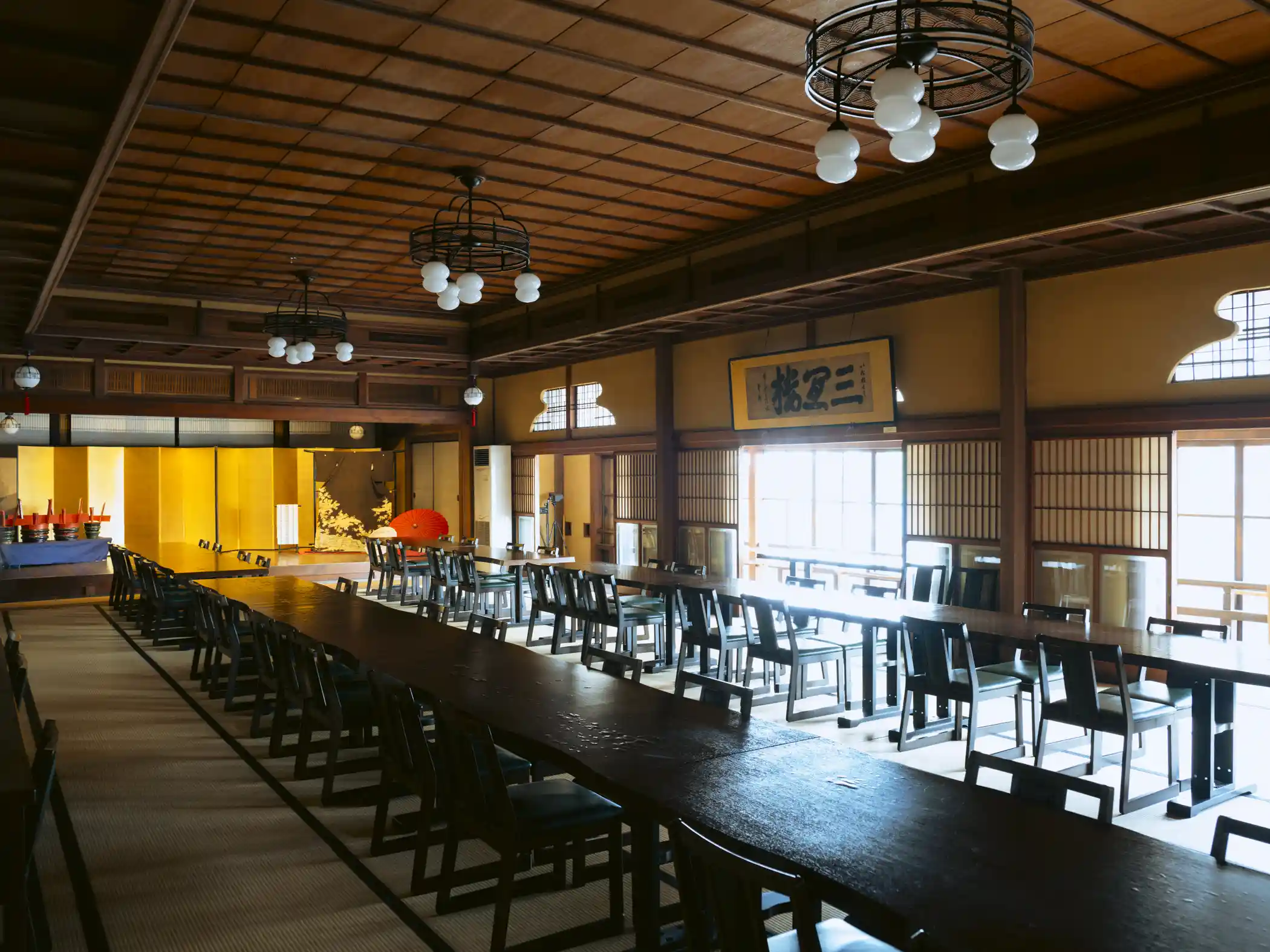
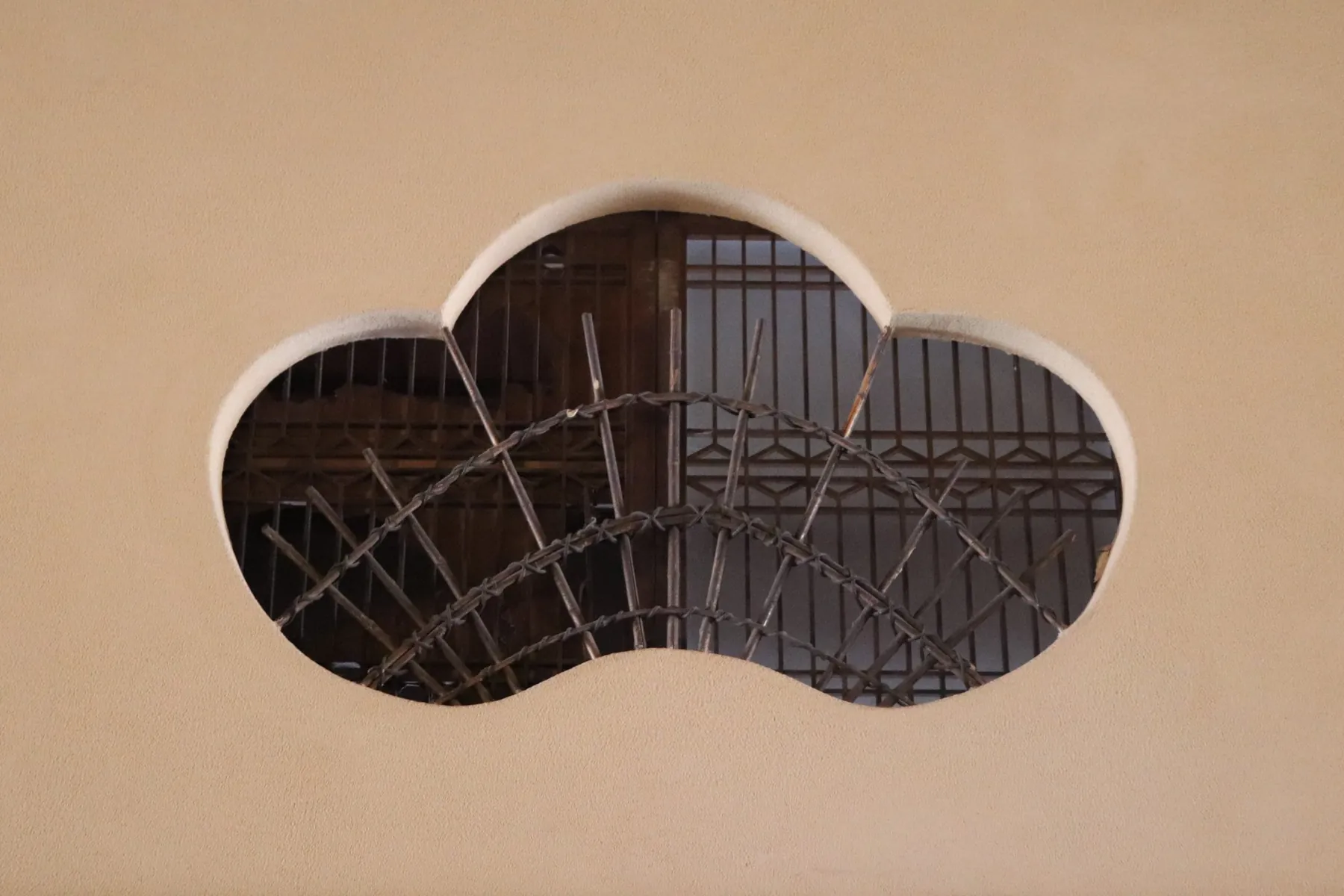
Sankirō stands on a high stone wall at the end of a slope overlooking the streets of Mojikō. The three-story wooden building that appears at the top of the slope has a dignified presence based on the sukiya style (a light and refined architectural style that incorporates elements of tea houses). On the second floor, the large hall known as the “Hyakujōma” (hundred-mat room) consists of a 64-tatami-mat room and a 16-mat stage. Although the third floor sits above it, there is not a single pillar in the room. The shitaji-mado windows (windows made by leaving part of an earthen wall unplastered to reveal its bamboo lattice) and ranma (decorative openings above the partitions between rooms) differ from room to room, with motifs such as pines, mountains, clouds and the moon, from the lower floors upward. Playful touches can be found down to the smallest details.
Miyake Asa’s ryōtei, where business leaders and cultural figures gathered
Sankirō was founded by Miyake Asa, who had become familiar with the traditional performing arts in Gion, Kyoto, in her youth. Against the backdrop of the international trading port’s prosperity, Sankirō flourished as a venue where companies and banks entertained their guests. Idemitsu Sazō, who founded Idemitsu Shōkai (later Idemitsu Kosan) in Moji, was especially fond of this ryōtei and is said to have hosted the “Kazashi-kai,” a gathering where geisha performed their arts. Sankirō closed around 1955 and faced demolition in 2005. Local volunteers formed the “Association to Preserve Sankirō” and saved the building by collecting 16,000 signatures and about 19 million yen in donations within a year.
Special access to rooms that are normally closed to the public
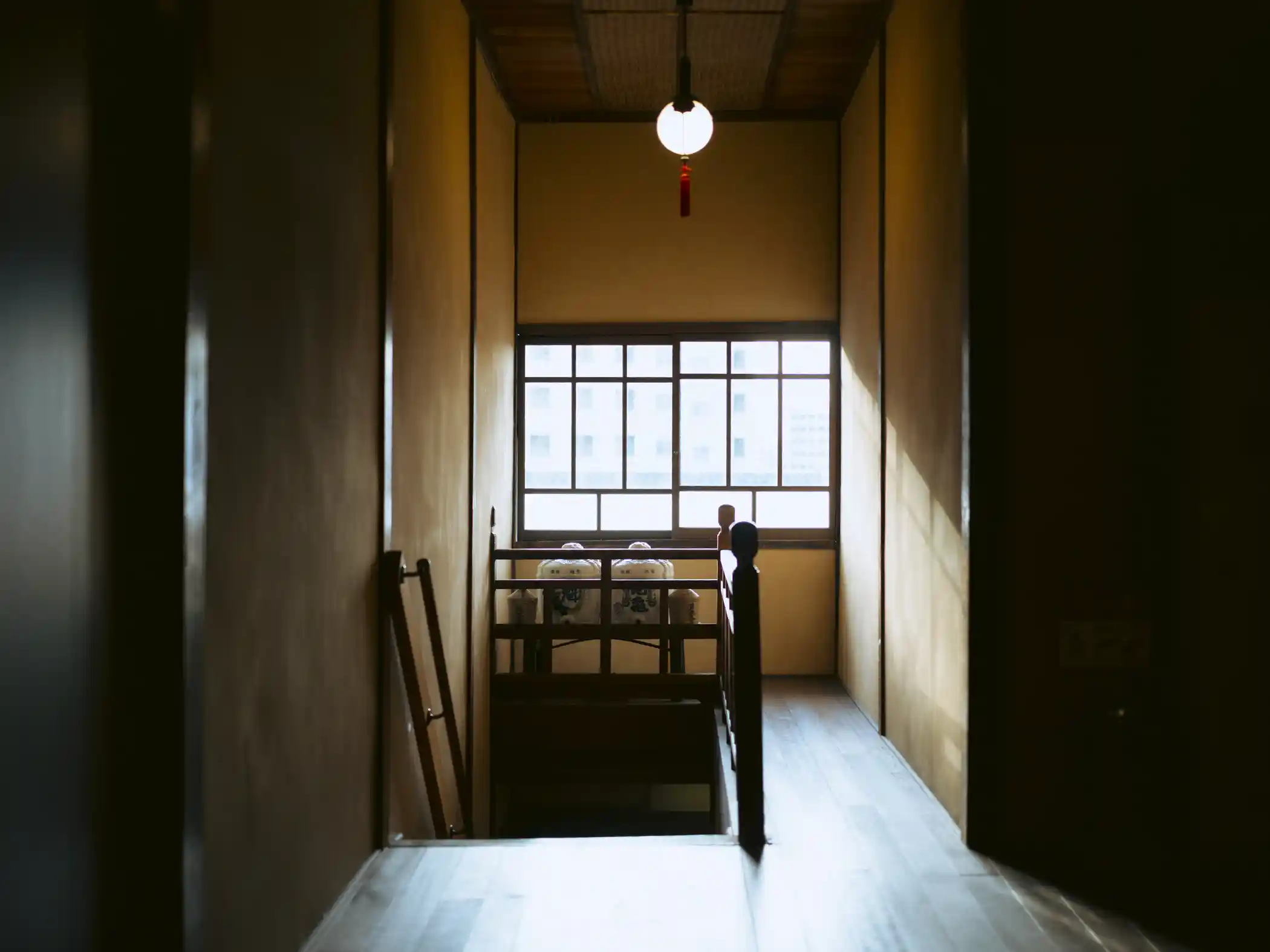
On this tour, you can also see rooms that are normally not open to the public. Take your time to explore the room said to have been a favorite of Idemitsu Sazō, as well as the “Haiku Room,” which was loved by the haiku poet Takahama Kyoshi. As you follow the shitaji-mado windows and tokonoma alcoves, each with its own character, the splendor of the ryōtei, where banquets were held night after night, quietly comes back to life.