Hesaki Lighthouse stands on Hesaki point in Shiranoe, Moji Ward, Kitakyushu, Fukuoka Prefecture, and was first lit in 1872. Counting temporary lighting, it was the 12th Western-style lighthouse to be lit in Japan, and it was built under the guidance of the British engineer Richard Henry Brunton, known as the “Father of Japanese Lighthouses.” In 2020, it was designated a national Important Cultural Property together with its former keepers’ quarters and other structures, and it remains an active lighthouse managed by the Moji Coast Guard Office* of the 7th Regional Coast Guard Headquarters.
Built to almost the same design and at the same time as Mutsurejima Lighthouse (Shimonoseki, Yamaguchi Prefecture), which stands at the western entrance to the Kanmon Strait, it is one of a pair known as the “twin lighthouses.” Selected as one of Japan’s 50 Selected Lighthouses, it has watched over the ships passing through the strait for more than 150 years.
*A national agency that keeps the seas safe and secure. It manages 176 aids to navigation, including lighthouses such as Hesaki Lighthouse and Mutsurejima Lighthouse, and light buoys.
A white lighthouse on the high ground of a cape, with a sparkling Fresnel lens
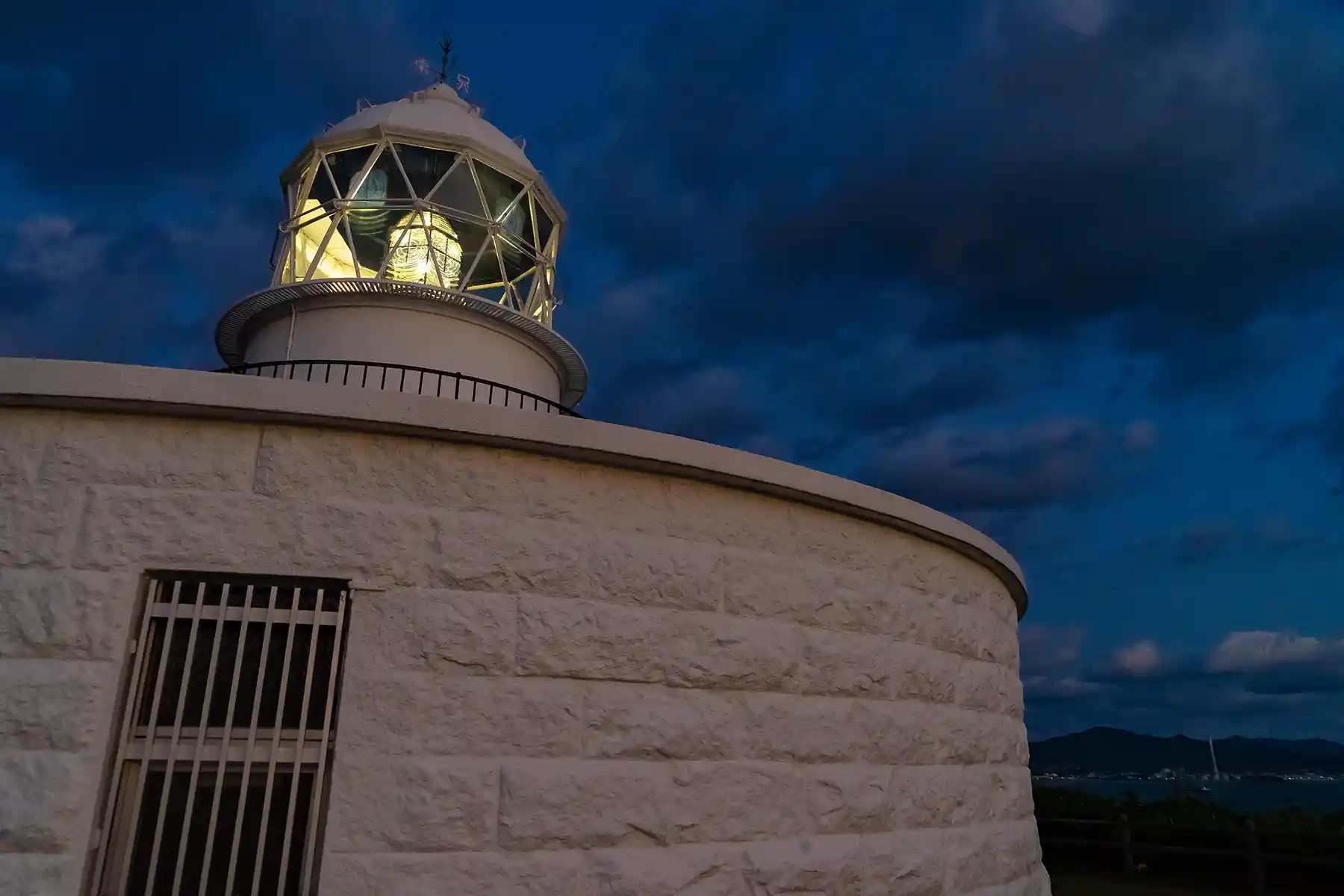
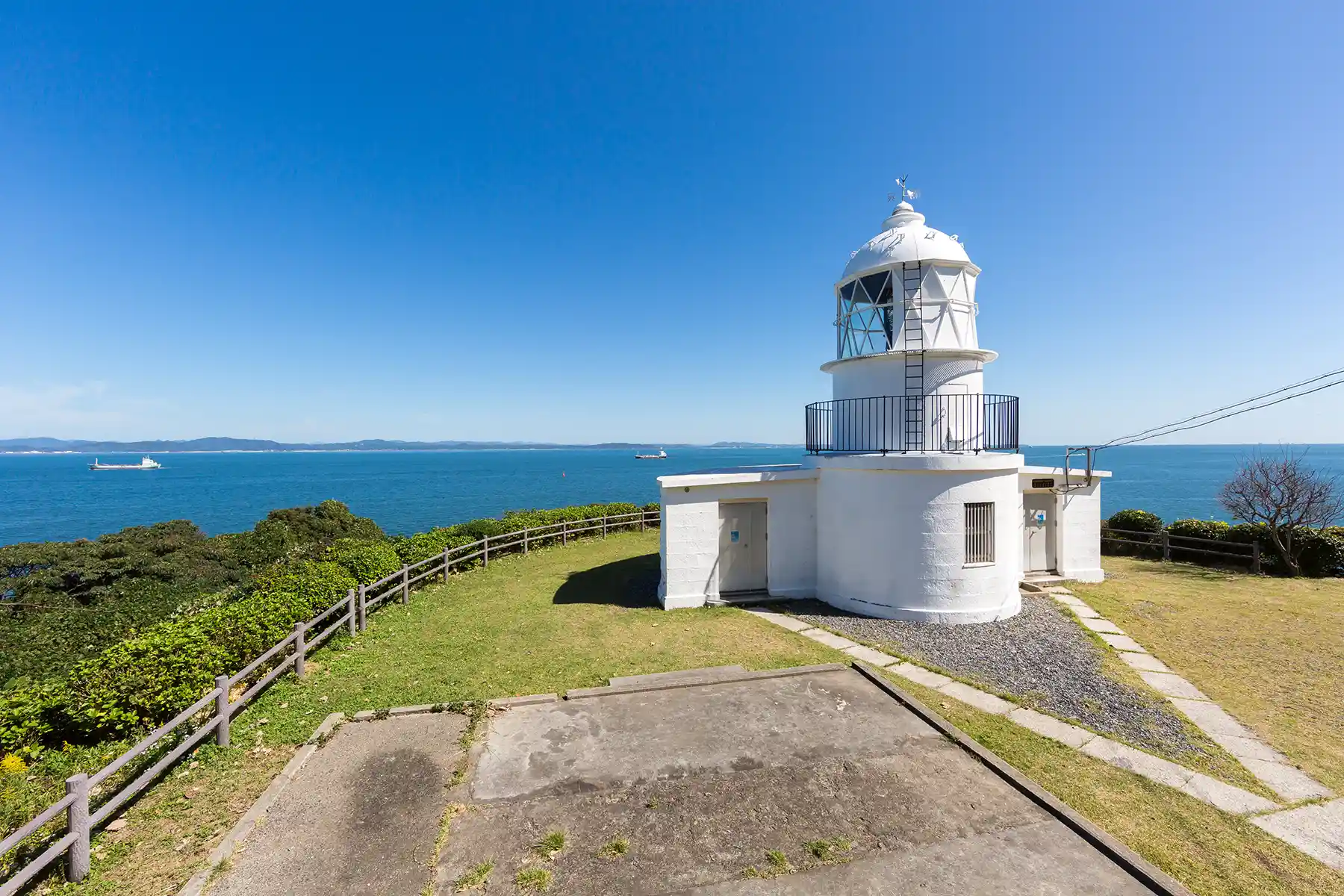
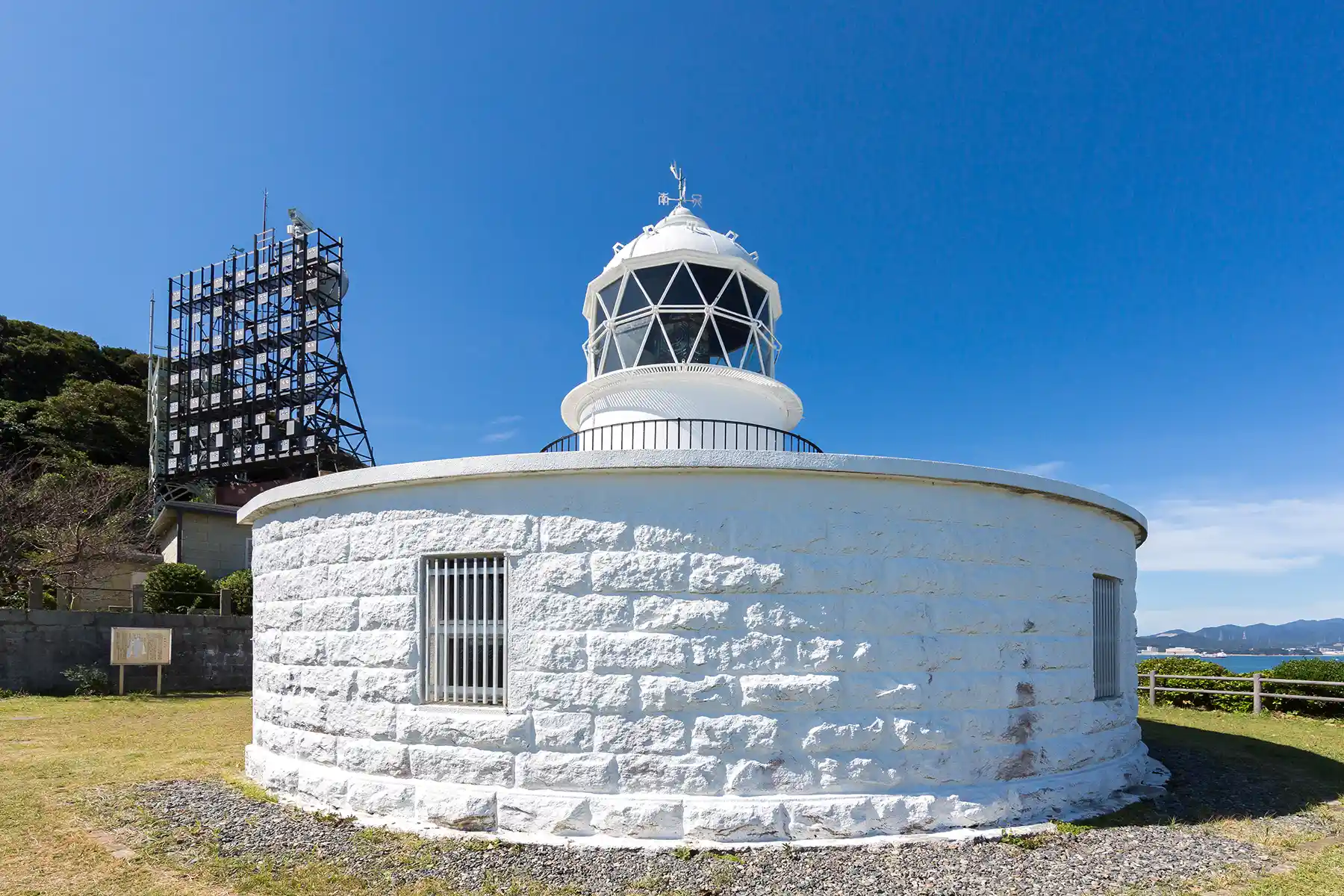
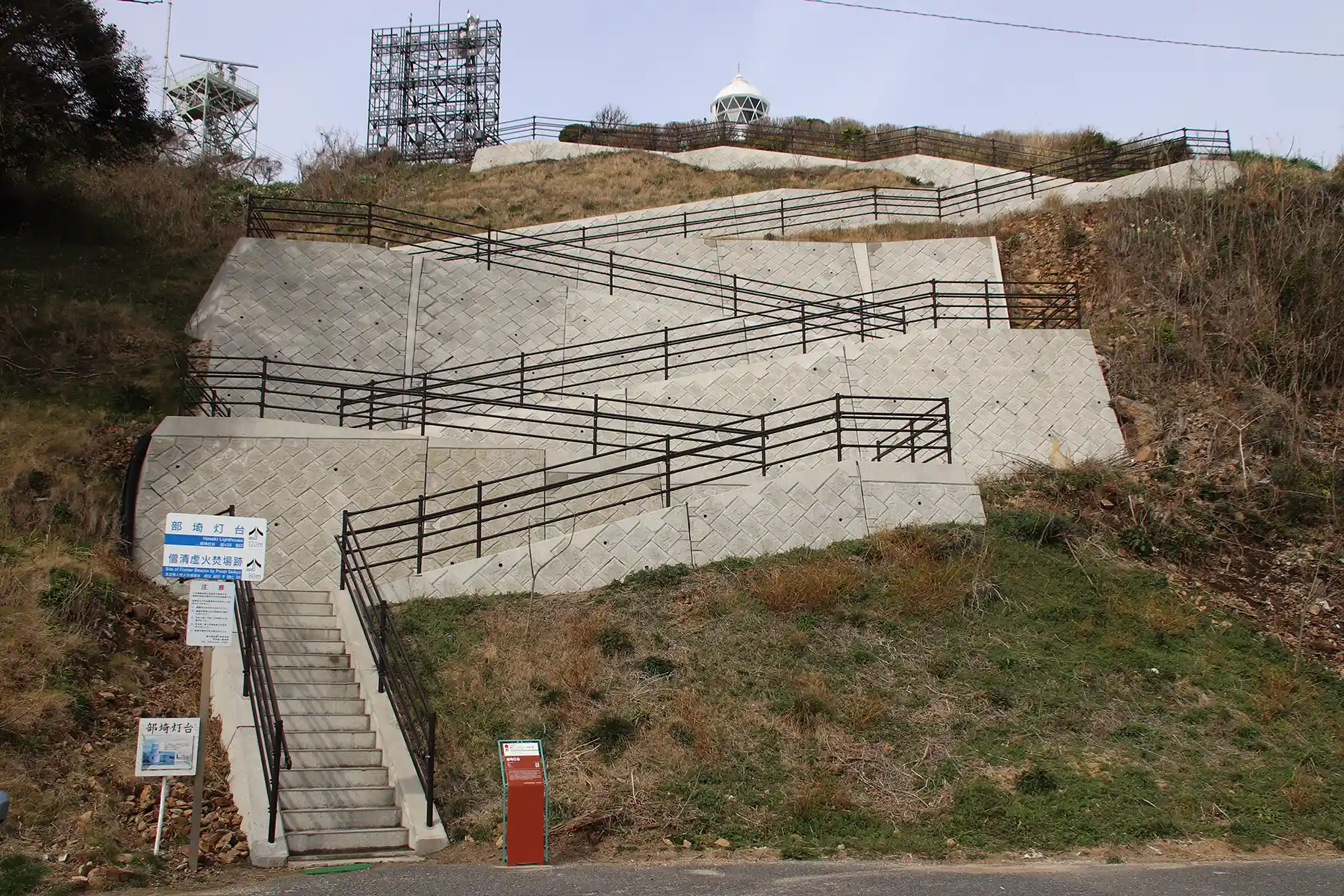
Hesaki Lighthouse stands at the tip of a cape jutting into the Suō-nada Sea, on a small hill reached by climbing stairs from the coastal road. It is of a type called a “composite low tower,” with a cylindrical tower of stacked granite and a semicircular annex attached, and the top of the tower forms a neat dome. Because the tower is low, you can see the Fresnel lens shining in the lantern room up close, even from the top of the neighboring stone wall.
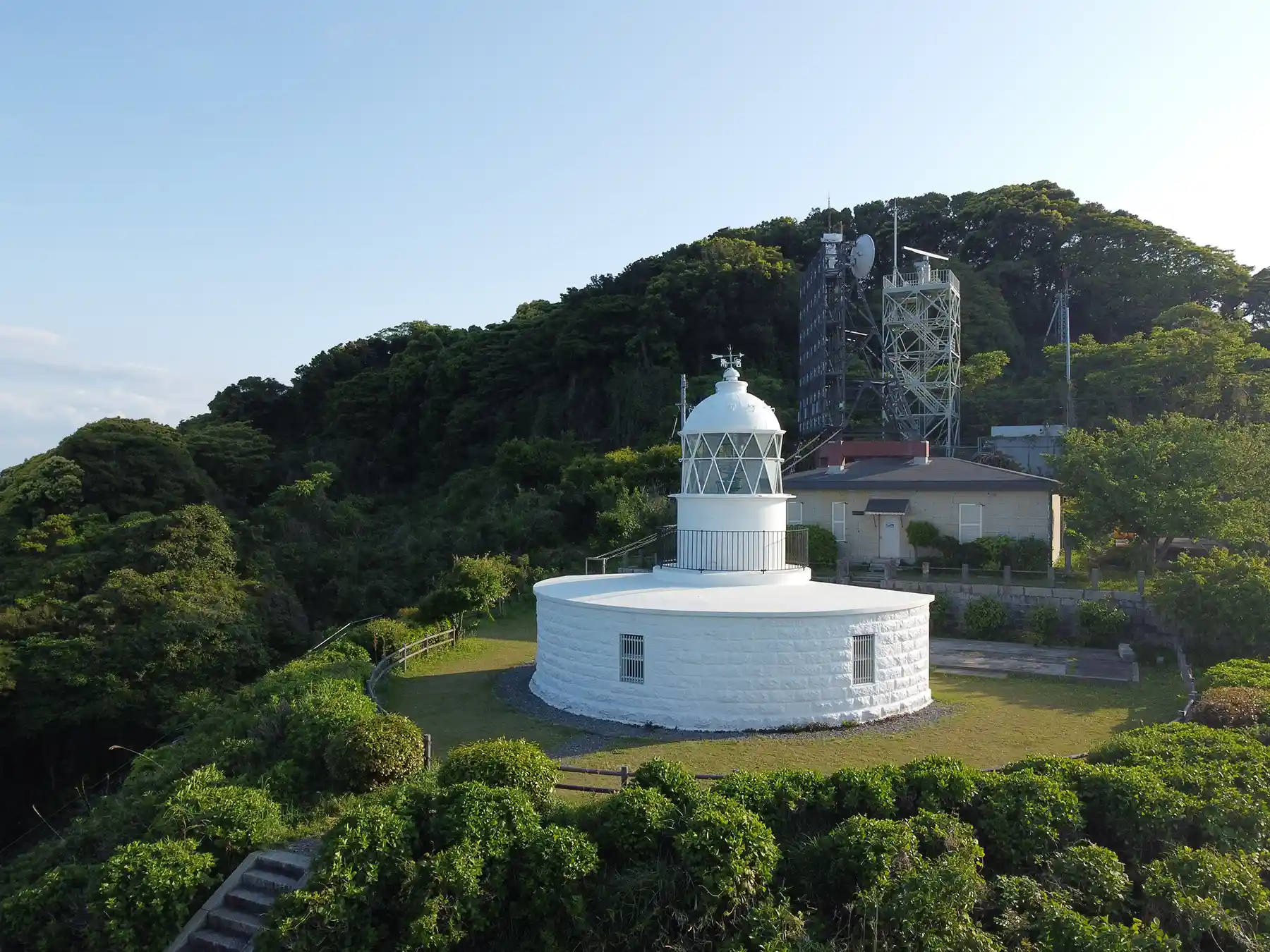
A Fresnel lens gathers light with prisms cut in concentric circles and sends it far out to sea. The lens of Hesaki Lighthouse turns once every 90 seconds, sending its light about 32 km. On higher ground stand the former lighthouse keepers’ quarters (taisokusho), where the keepers who tended the lighthouse once lived.
From the monk Seikyo’s beacon fires to a Western-style lighthouse
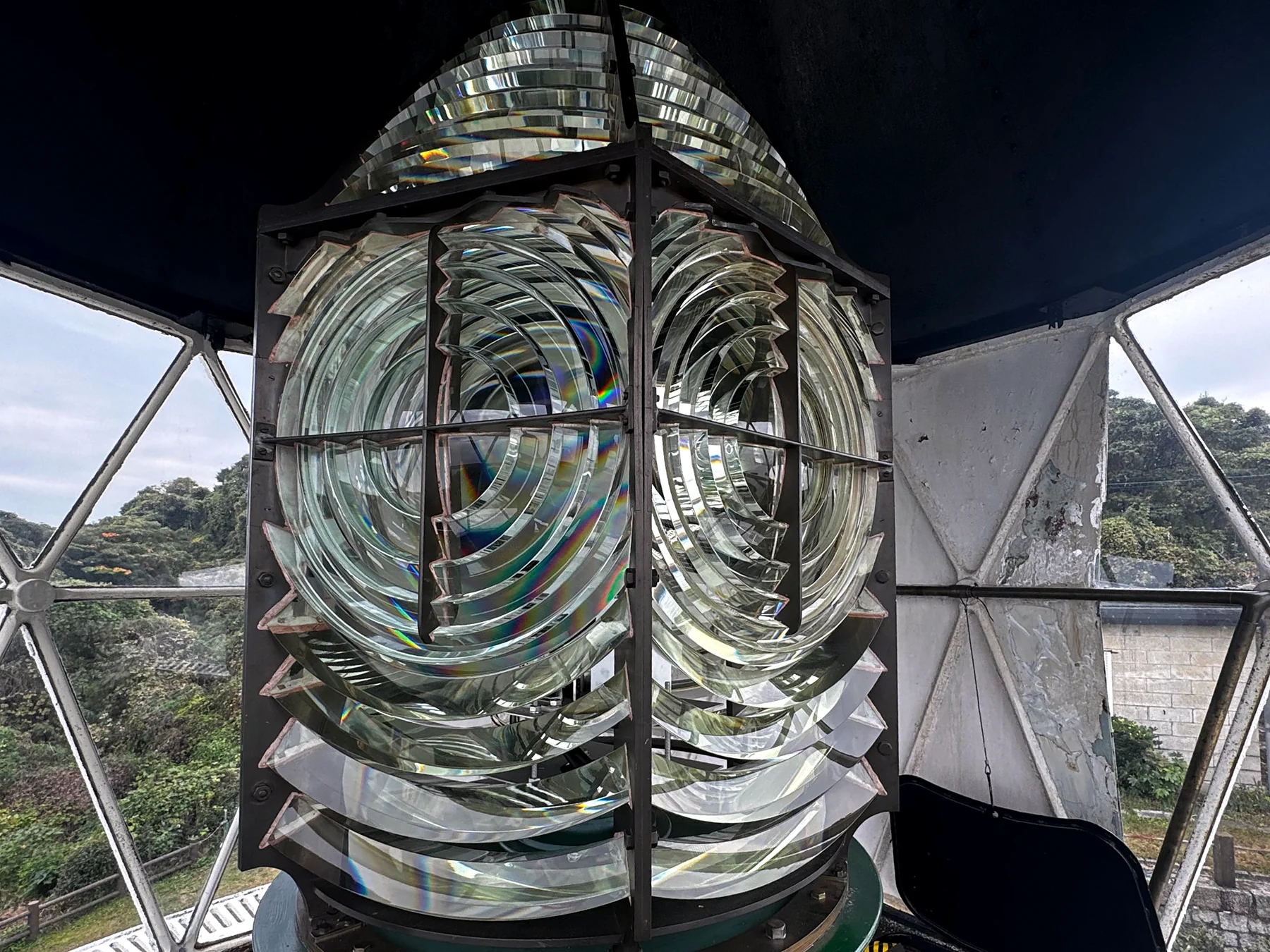
The waters around Hesaki are full of hidden reefs and have long been a dangerous spot where shipwrecks never ceased. In 1836, the monk Seikyo, on his way to Mount Kōya for religious training, learned of the dangers of these waters, left his ship, and resolved to keep a fire burning on the cape. By day he collected funds by begging for alms, and by night he burned a fire as a beacon for ships. Seikyo kept the fire alive for 13 years until his death, and his wish was carried on by the villagers.
As ports opened in the final years of the Tokugawa shogunate, the number of foreign ships passing through the Kanmon Strait rose sharply. Ahead of the opening of the port of Kobe, Japan and Britain agreed to build lighthouses at five locations, and Hesaki was one of them. Then, in 1872, a Western-style lighthouse was born under Brunton’s guidance. Near the lighthouse, you can still see the restored beacon fire site (hitakiba) and a statue of Seikyo.
Inside the lighthouse, with the cooperation of the Moji Coast Guard Office
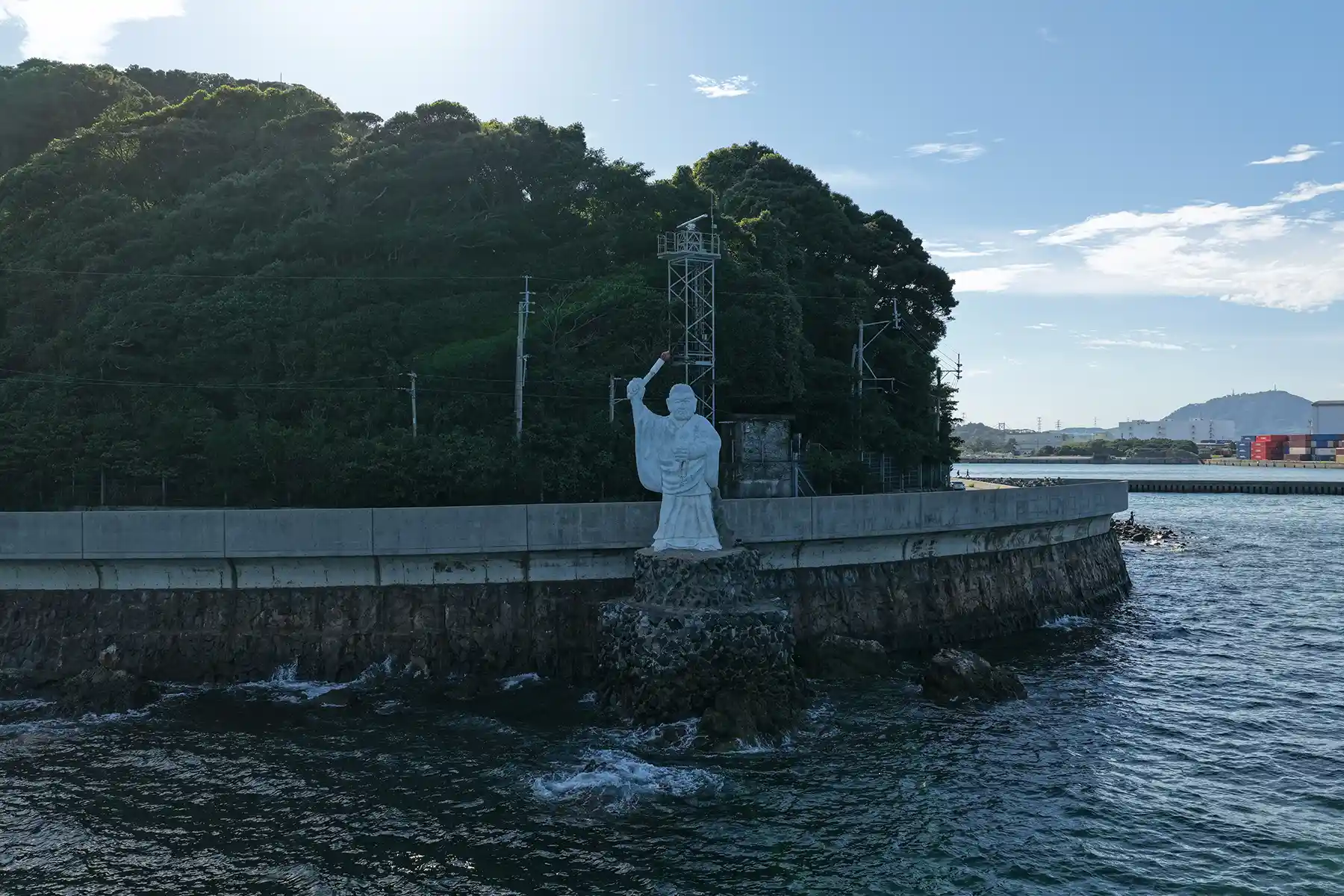
In this program, with the cooperation of the Moji Coast Guard Office, which manages Hesaki Lighthouse, you will be given a special look inside the lighthouse, which is normally closed to the public. Above the entrance is a copper plaque engraved with the date of the first lighting. Inside, some of the 19th-century equipment, including the lens, is still in active use.
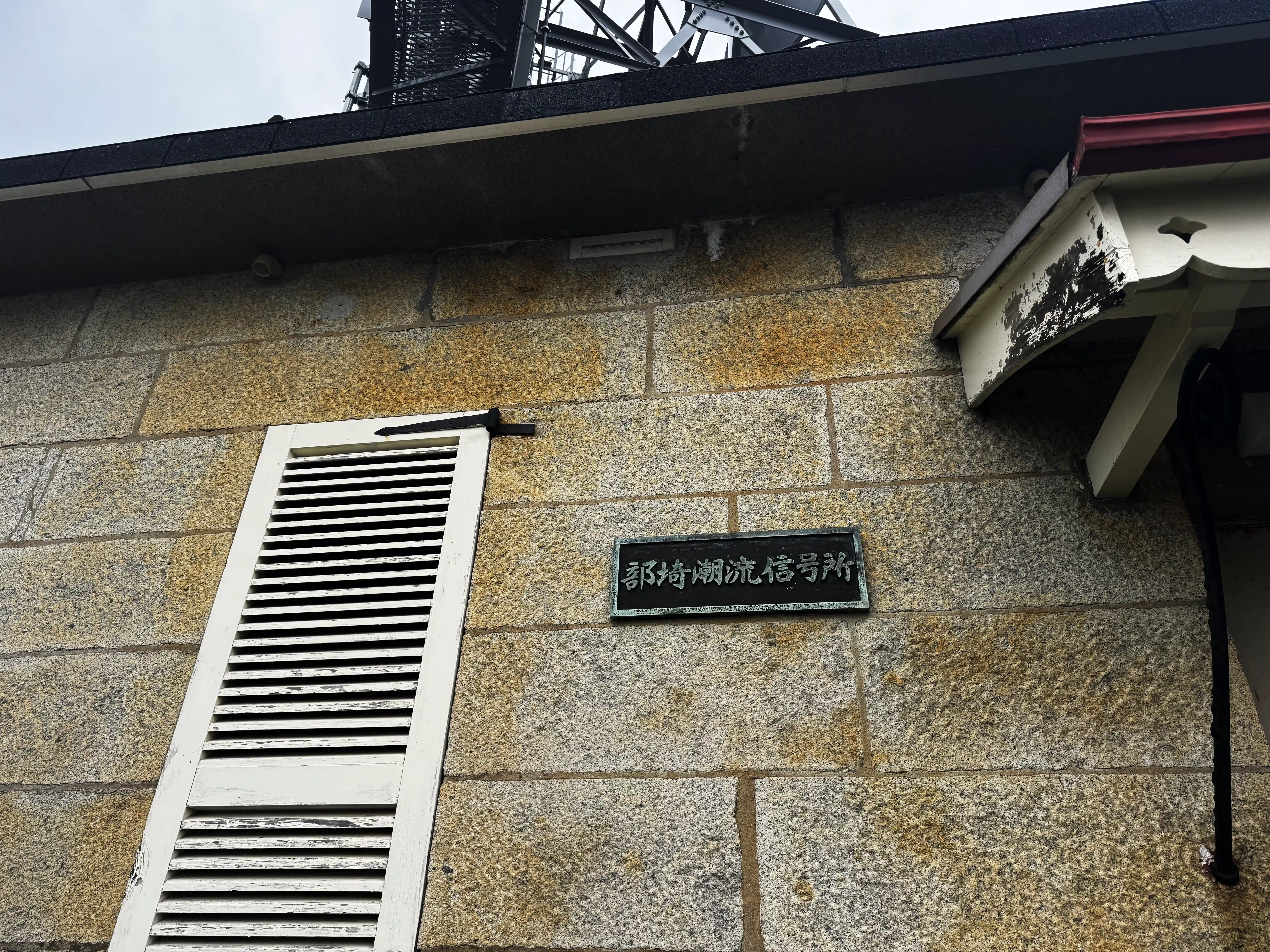
Around Hesaki Lighthouse, a local volunteer group, Utsukushii Hesaki Tōdai o Mamoru Kai (Society for Protecting the Beautiful Hesaki Lighthouse), has been cleaning the grounds since 2005. Its activities began with gathering the pebbles scattered around the lighthouse back to its base and sweeping the stairs, to keep the long-weathered lighthouse landscape beautiful for the future. Cleanups are still held on the morning of the second Sunday of every month.
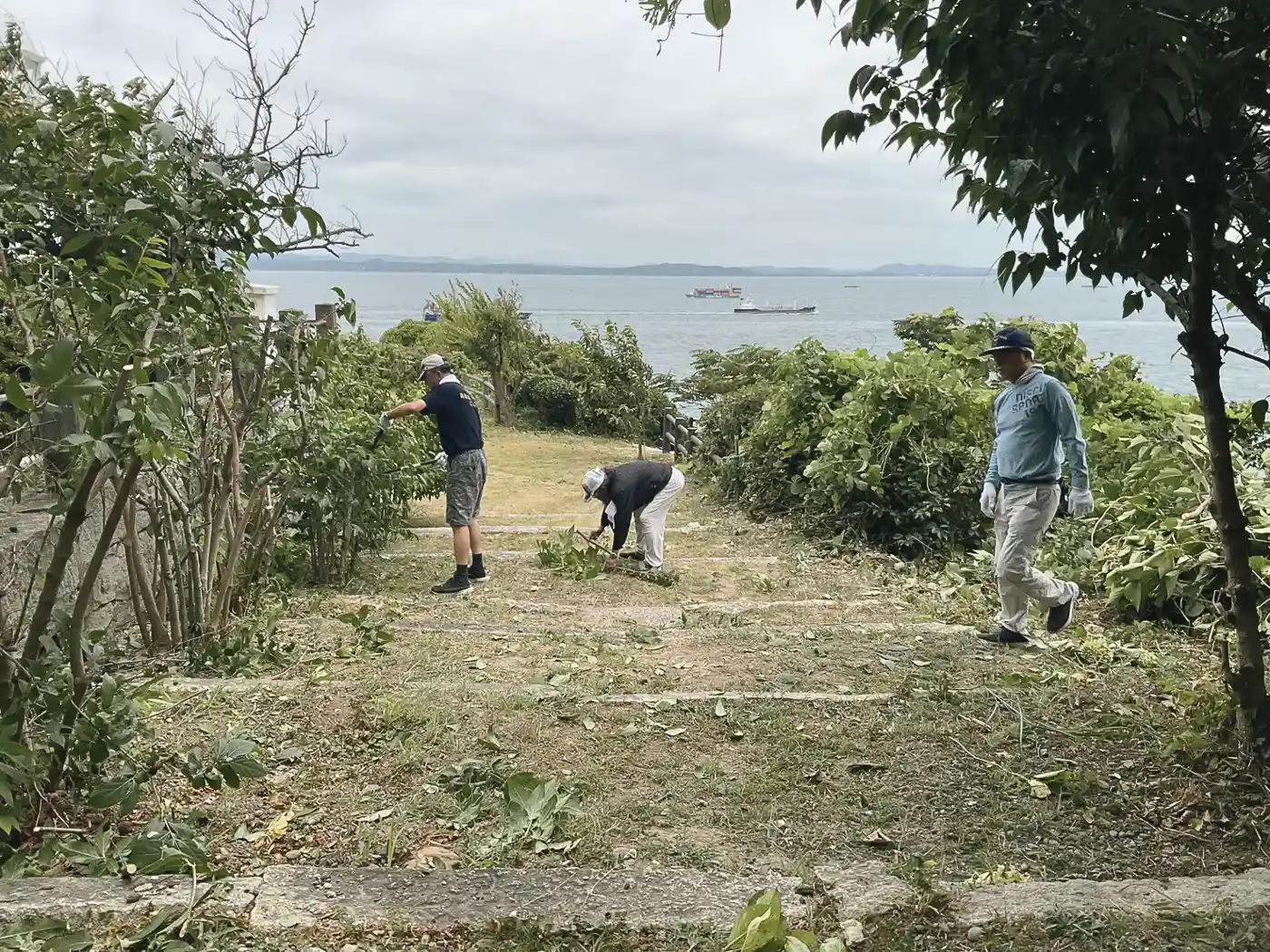
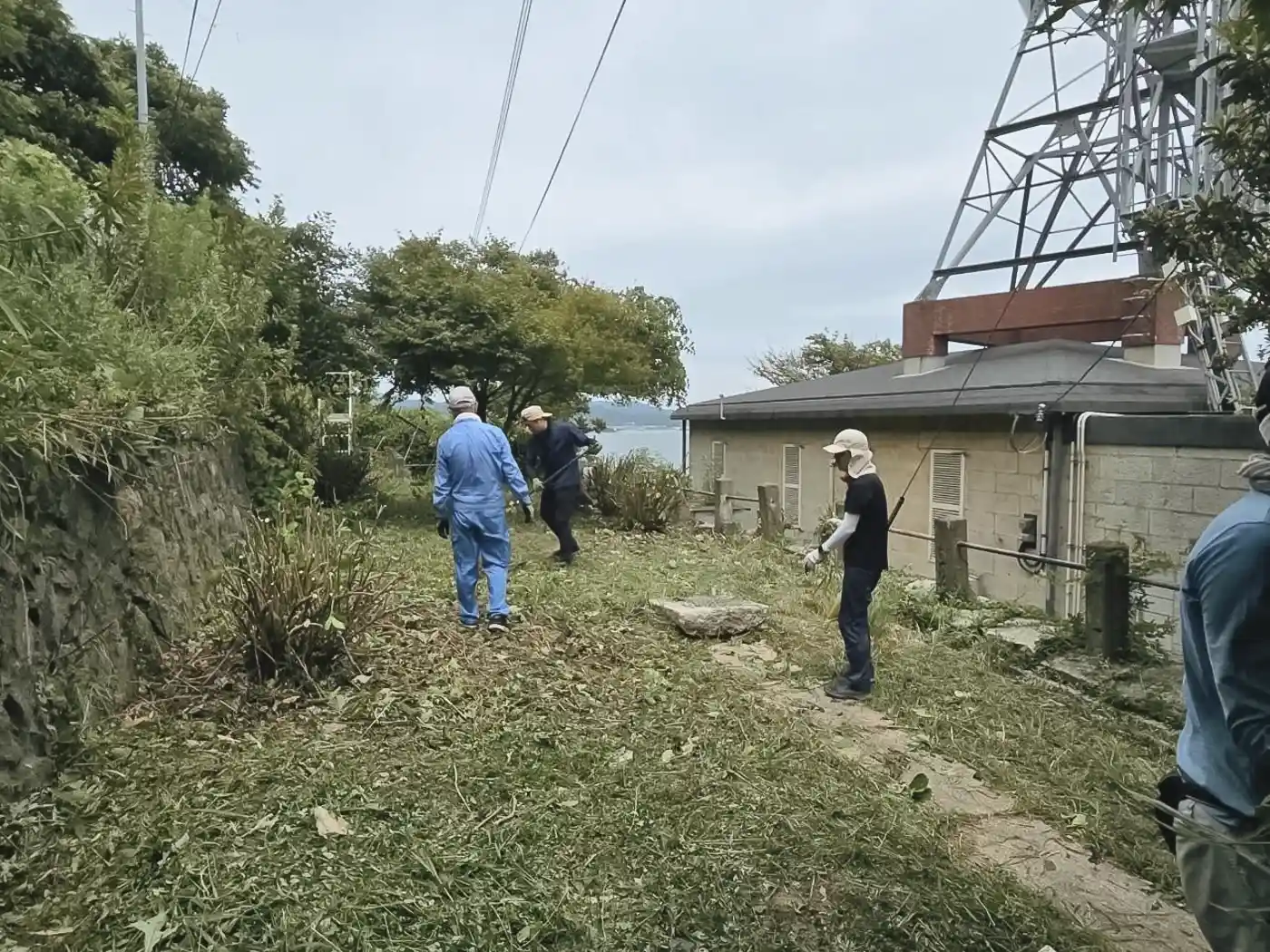
This program is held together with the Society’s cleanup, combining participation in the cleanup with a visit inside the lighthouse. You will clean, with your own hands, a lighthouse that has lit the sea for more than 150 years, and then look up at it from the inside. It is a special time to share the feelings of the people who have protected the lighthouse and passed it on.